Where should we plant mangroves?
A data-driven look at East Java’s coastline
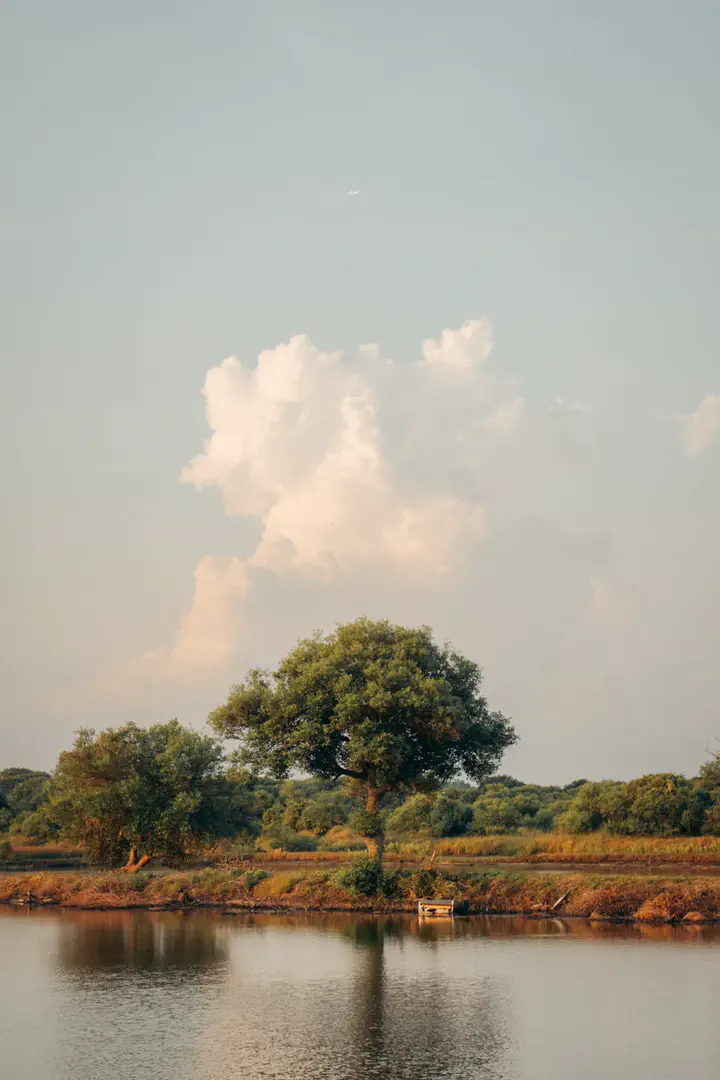
Mangrove restoration involves difficult decisions because land, funding, and time are limited. Spatial analysis can help identify where restoration may provide the greatest ecological and social benefits. With those constraints in mind, where should mangroves be planted first?
Not every coastline faces the same threats, every community has different vulnerabilities, and the benefits of mangrove planting vary by location. Effective restoration planning therefore needs to consider the geography of risk, the biology of mangrove growth, and the people who depend on the coast.
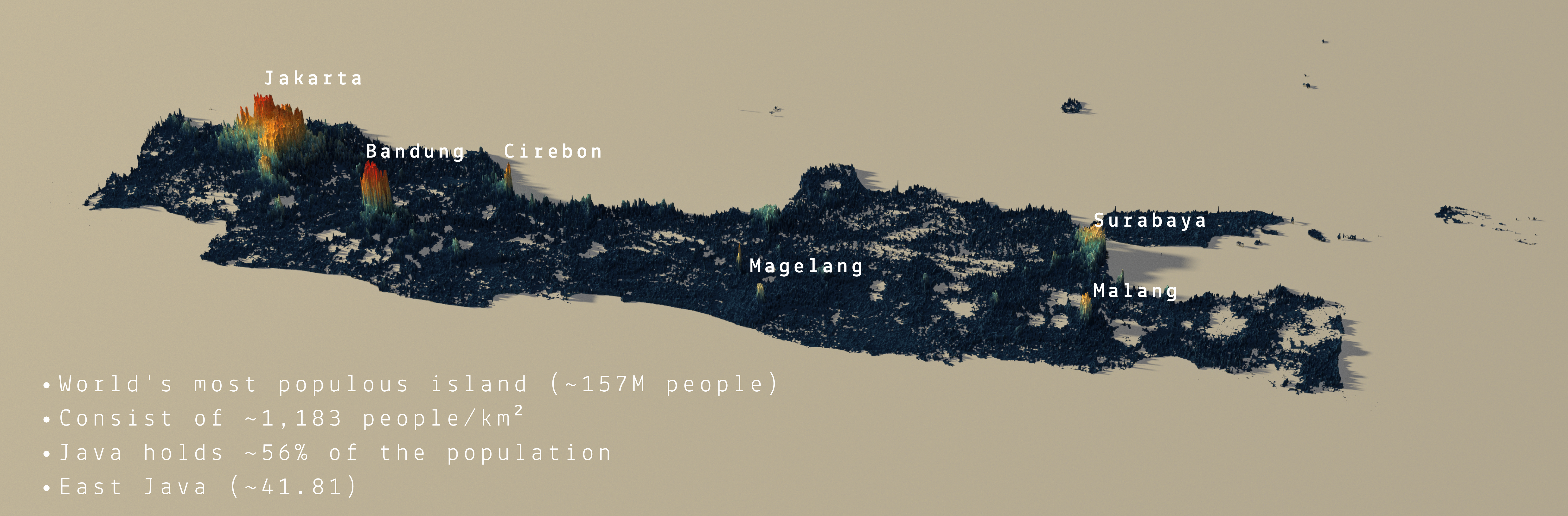
Before deciding where to plant mangroves, we need to understand who lives along these coastlines. Java is one of the most densely populated islands on Earth; coastal land is not just scenery but space where millions of people build homes, livelihoods, and aspirations. Planting mangroves away from populated areas may provide ecological benefits, but it may contribute less directly to reducing human vulnerability. In contrast, planting them near densely inhabited estuaries may offer more direct protection to coastal communities. Population density can therefore help show where ecosystem degradation creates the greatest risks for people.
Understanding where people live is only the first layer. The second layer is ecological: where are mangroves currently located, and where are they absent? Existing mangroves act like living infrastructure, they dissipate wave energy, trap sediment, slow tidal intrusion, and reduce erosion. Their absence means a coastline stands exposed. Their presence means restoration efforts must shift from planting to protecting what already stands.
Once people and mangroves is understood, we can finally address restoration with a framework grounded in evidence. To do this, I used the Coastal Vulnerability model from the InVEST suite, developed by the Natural Capital Project. Unlike broad national assessments, this model does something remarkably practical: it divides the coastline into small segments and calculates how exposed each one is to physical hazards. It evaluates wind, waves, storm surge potential, sea-level rise, and elevation, and then performs a counterfactual analysis, what would exposure look like if mangroves were not present?
The raw exposure maps are informative, but exposure by itself doesn’t answer the restoration question. A hazardous coastline with no residents might be a conservation target, but it is not a restoration priority. A moderately exposed coastline sheltering thousands of people could be one storm away from disaster. Restoration becomes meaningful only when physical exposure intersects with human presence and ecological feasibility.
So I constructed a restoration index built on three interlocking ideas:
- Where mangroves are absent, vulnerability is unbuffered
- Where exposure is high, failure is costly
- Where population density is high, failure becomes human tragedy
When these factors are combined, the results reveal a very different map of priority than intuition alone would suggest. The highest priority zones for mangrove restoration in East Java are not the dramatic, wave-battered southern cliffs frequently shown in environmental posters. They are the quiet, low-lying deltas of the north, places shaped by centuries of sedimentation, where storm surge creeps inland, and where thousands of people live within walking distance of the tide line. In these places, mangroves are not scenery. They are safety.
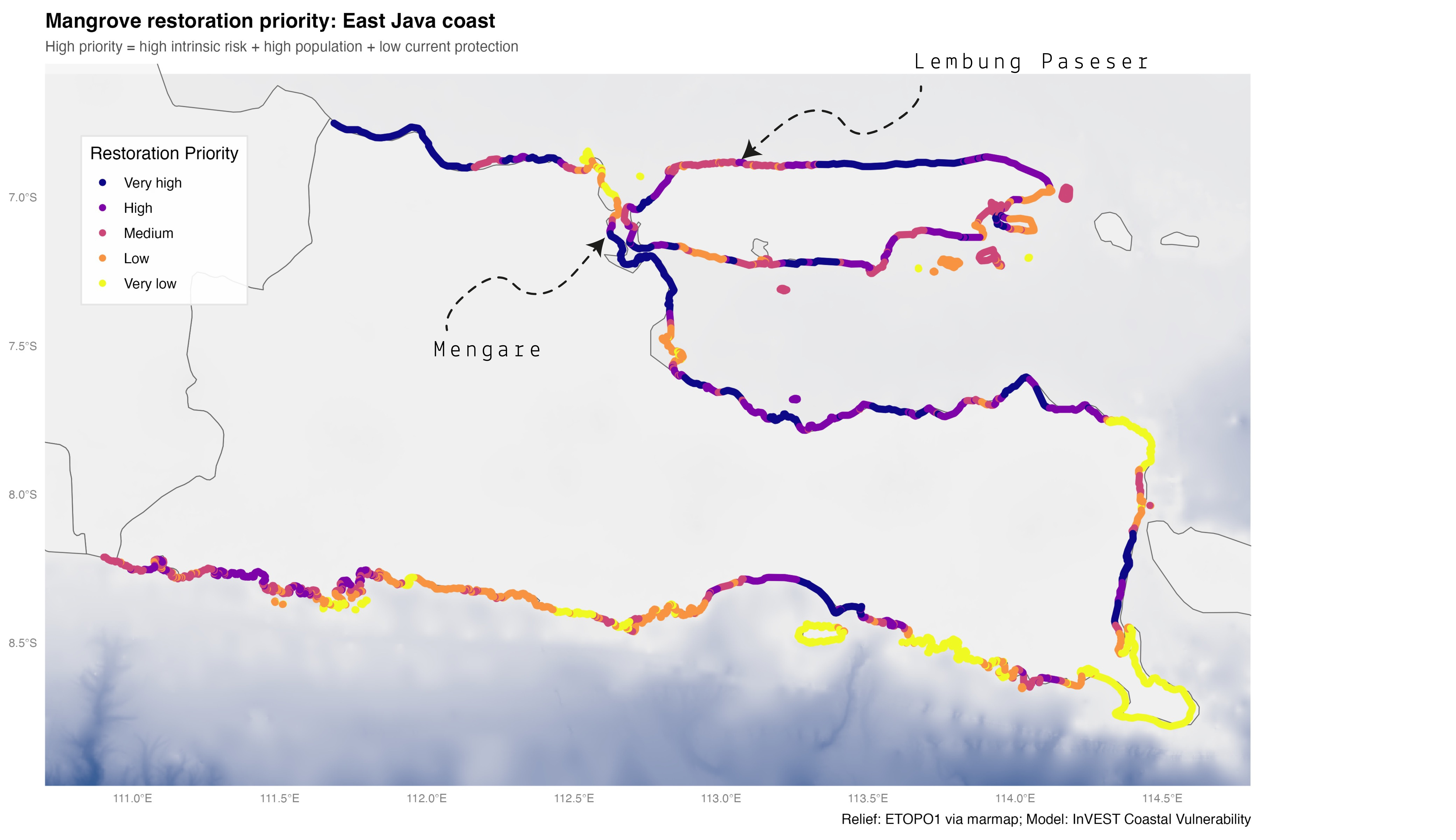
Together, the three maps—population density, mangrove presence, and restoration priority—offer an additional evidence-based perspective on where restoration may have the greatest impact. Considering population, exposure, and ecological feasibility can help make restoration planning more targeted.